
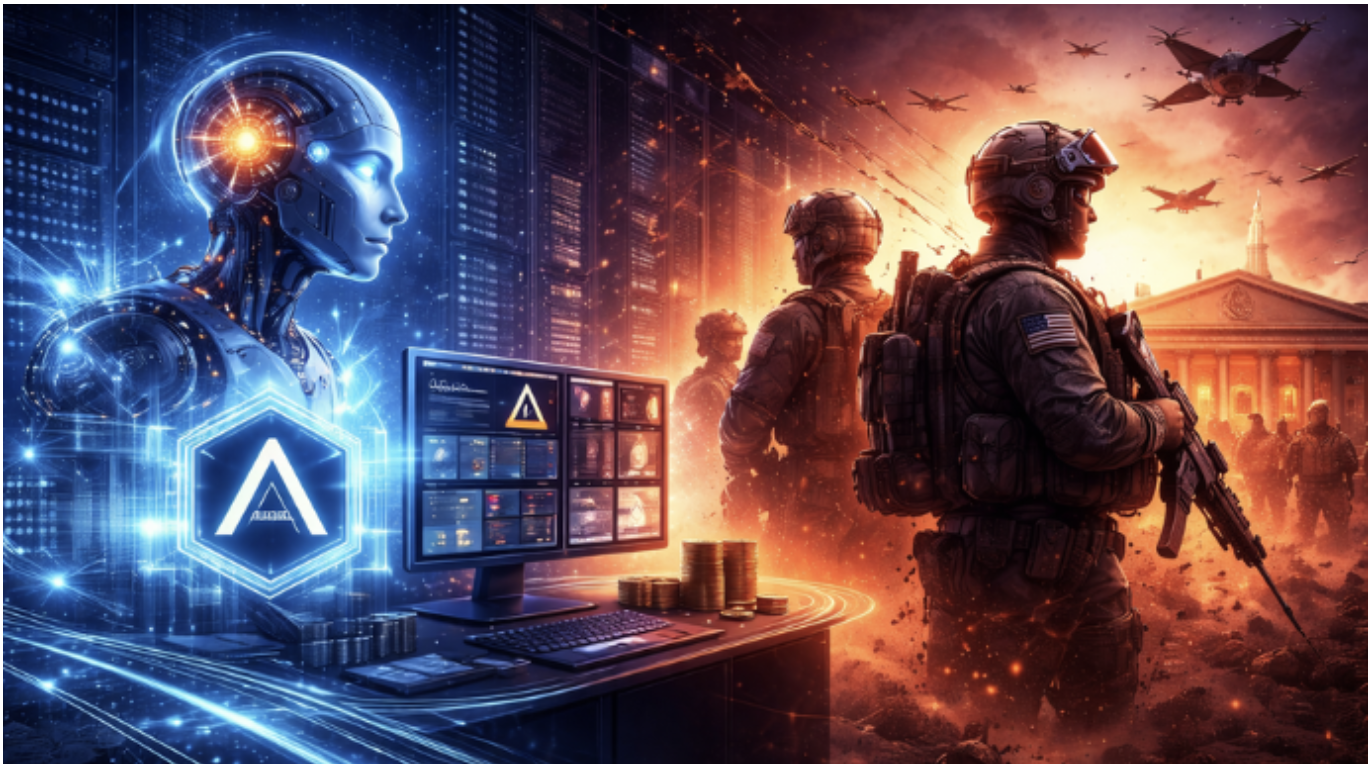
Anthropic, the AI safety-focused startup backed by over US$60 billion in funding from heavyweights like Amazon and Google, finds itself in the crosshairs of the US Department of Defence (DoD)—now rebranded under Secretary Pete Hegseth as the Department of War. On February 26, 2026, the DoD flagged Anthropic as a “supply chain risk,” barring federal agencies and contractors from using its technology. This dramatic escalation stems from a principled standoff over AI ethics, raising urgent questions: Does this jeopardise the massive capital infusion propping up Anthropic’s frontier models like Claude? And what does it mean for the broader AI landscape?
The ruckus: A clash over AI’s role in warfare
The controversy ignited when Anthropic CEO Dario Amodei publicly drew red lines against certain military applications of its AI. In a February statement, Amodei emphasised Anthropic’s commitment to “safe and interpretable” systems, explicitly refusing to enable surveillance tools or autonomous weapons deemed “unlawful or unethical.” This is built on Anthropic’s long-standing Constitutional AI framework, which embeds human rights safeguards directly into model training.
The DoD, pushing for “all lawful uses” in national security contracts, saw this as insubordination. Secretary Hegseth, echoing President Trump’s Truth Social directive, accused Anthropic of prioritising “woke constraints” over US defence needs. Negotiations broke down rapidly: Anthropic rejected carve-outs for unrestricted military access, prompting the DoD to invoke 10 U.S.C. § 3252—a procurement statute typically reserved for foreign adversaries like Huawei. The result? A blanket ban on Anthropic tech across federal systems and any contractors touching DoD work.
Anthropic fired back with a defiant statement: “We will not compromise our safety principles, even under pressure.” The move weaponises supply chain rules against a domestic innovator, marking a new front in the AI arms race.
Repercussions for Anthropic: A US$60 billion windfall at risk?
Anthropic’s business model leans heavily on enterprise and government deals to monetise its Claude models, which power everything from code generation to analysis. The DoD label inflicts immediate pain:
- Lost revenue pipeline: Deals worth hundreds of millions in federal and defence work shift to rivals like OpenAI. Contractors like Lockheed Martin and Palantir must now purge Anthropic tools to avoid debarment.
- Enterprise chill: Regulated sectors—finance, healthcare, defence-adjacent firms—face compliance nightmares. Expect deal scrutiny and diversification away from Anthropic, potentially shaving 20-30 per cent off near-term growth.
- Investor jitters: The US$60 billion infusion (including Amazon’s US$8 billion and Google’s US$2 billion stakes) was tied to Anthropic’s path to US$10 billion+ annual revenue. A “flight risk” stigma tests backers’ resolve, though their strategic investments in cloud hosting provide some insulation.
Yet consumer love tells a counter-story. Post-dispute, Claude rocketed to #1 on Apple’s US App Store free apps chart on February 28, dethroning ChatGPT. Daily sign-ups tripled, free users surged 60 per cent, and servers nearly buckled under demand. Users hailed Anthropic’s stance as a “principled stand against Big Brother AI.”
This viral boost pads direct revenue—Claude’s paid tiers are converting app users at record rates. But commercially, it falls short: Consumer apps generate margins dwarfed by enterprise contracts (think US$1M+ deals vs US$20/month subs). Government losses sting hardest, as they validate models for hyperscalers and unlock scale. Without quick legal relief, Anthropic’s valuation could dip 15-25 per cent in the short term.
| Business segment | DoD label impact | Consumer surge offset |
|---|---|---|
| Government/defence | Severe ban; pipeline to rivals | None |
| Enterprise | Compliance fears slow deals | Buzz helps, but risk aversion wins |
| Consumer/direct | Unaffected | Massive tailwind: #1 app ranking |
| Overall growth | 10-20 per cent revenue hit in 2026 | Cushions ~30 per cent of losses |
Other companies’ reactions: A chill descends on AI’s safety stance
The DoD’s unprecedented move against Anthropic has sent shockwaves through Silicon Valley, forcing rivals to recalibrate their entire approach to government relations, safety commitments, and contract language overnight. OpenAI wasted no time, issuing a terse statement recommitting to “all lawful uses” just hours after the designation, quietly scooping up a US$200 million DoD pilot that Anthropic had been favoured for—proving that in AI procurement, hesitation is forfeiture. xAI followed suit, with Elon Musk tweeting that “safety redlines don’t apply when freedom’s on the line,” positioning his lab as the unapologetic defence darling.
Big Tech’s response has been surgical: Microsoft and Amazon (ironically, Anthropic’s own backers) are scrubbing “ethical carve-outs” from enterprise terms, reframing safeguards as mere “technical limitations” or “model performance thresholds” to dodge any whiff of moral posturing. Defence primes like Raytheon and Northrop Grumman have launched frantic audits, with internal memos leaked to Reuters revealing “de-Anthropogenic protocols” that mandate ripping out Claude integrations within 90 days—costing millions but safeguarding billion-dollar contracts.
The real shift? A broader industry pivot from bold public principles to opaque internal governance: expect amicus briefs defending Anthropic’s procedural rights (filed by a consortium of 20+ tech firms), but zero endorsements of its substantive redlines. No one wants Hegseth’s next target sticker. This episode has already reshaped decision-making: AI labs now greenlight government deals only after legal war-gaming “supply chain risk” clauses, turning safety teams into compliance departments.
Courts poised to intervene: A legal reckoning awaits
Anthropic’s lawsuit, filed February 28 in the US District Court for the Northern District of California, promises a courtroom thriller that could redefine executive power over domestic tech. Experts like those at Lawfare predict a high likelihood of preliminary injunctions within weeks: the designation flunks basic Administrative Procedure Act (APA) tests for being “arbitrary and capricious”—there’s scant evidence of actual supply-chain sabotage (Anthropic is US-based, with transparent code), and it’s transparently retaliatory, triggered by a presidential Truth Social post rather than an intelligence assessment.
Deeper vulnerabilities abound. Section 3252 of Title 10 targets “unreliable” foreign vendors, not policy disputes with American firms; courts have struck down similar overreaches (e.g., Trump-era Huawei extensions). The “secondary boycott” provision—barring any DoD contractor from touching Anthropic—reeks of antitrust foul play, inviting First Amendment claims that it chills protected speech on ethics.
Precedents like FCC vs. Fox Television Stations (2009) bar punitive rulemaking without neutral criteria. Lower courts, packed with tech-savvy Ninth Circuit judges, are likely to stay the broadest bans first, narrowing them to direct DoD use while litigation drags into 2027. A Supreme Court showdown isn’t off the table if the administration appeals—imagine Alito grilling Hegseth’s lawyers on “woke” vs. “national security.” Win or lose, this forces a negotiated retreat: DoD lacks the bandwidth for prolonged fights amid China tensions.
Anthropic vs OpenAI: Ethical rebel vs pragmatic powerhouse shapes the industry
This clash crystallises two divergent AI philosophies now hardening into industry fault lines. Anthropic’s “Constitutional AI”—baking human rights into training data—earned it a cult following among researchers and consumers, but its refusal of military carve-outs painted a target. OpenAI, under Sam Altman, bet on “pragmatism”: flexible guardrails that bend for “lawful” defence needs, securing Stargate-scale government funding and positioning ChatGPT as the safe, scalable default.
The fallout amplifies this: OpenAI’s coffers swell with redirected billions, validating its “integrate everywhere” strategy and pressuring fence-sitters to follow. Anthropic’s brand glows brighter for talent wars (PhDs flooding LinkedIn DMs), and consumers (#1 App Store surge), but enterprise doors slam—Fortune 500 CIOs cite “regulatory uncertainty” in RFPs. Industry-wide, this bifurcates the market: “Ethical” labs cluster around consumer/oversight-heavy verticals (healthcare, media), while “pragmatic” ones dominate defence, intelligence, and hyperscalers. It’s reshaping hiring (safety experts to Anthropic, gov-rel pros to OpenAI), funding (VCs demanding “DoD-proof” term sheets), and even model architectures (more modular “national security forks”). Long-term, Anthropic’s court gamble could spawn a “safety moat” premium; OpenAI risks mission creep backlash if ethics scandals hit.
Google’s hypothetical playbook: Bend, don’t break—with a spicy side of lobbying
Google, haunted by the 2018 Project Maven employee revolt that cost it a US$10 billion DoD bid, knows this script too well—and its response would be a masterclass in survival ju-jitsu. No public redlines for Sundar Pichai; instead, a blitz of backchannel lobbying via its US$20 million+ annual D.C. war chest, flooding Hegseth’s inbox with “compromises”: high-level AI Principles intact on paper, but surgically tweaked to permit “lawful national security applications” with black-box internal reviews. Legally, they’d preempt with NDAs and “enterprise editions” that firewall consumer models from DoD scrutiny.
Spice it up: Google wouldn’t hesitate to leak “Hegseth overreach” stories to Axios, deploy Ruth Porat’s finance muscle to threaten cloud-hosting pullbacks, or even dangle Gemini exclusives for compliant agencies. But here’s the realpolitik—they’d give in before a designation sticks, prioritising US$100 billion+ quarterly ad revenue over purity. Unlike bootstrapped Anthropic, Google’s diversified empire (US$300B+ Q4 ’25) absorbs hits; it’d emerge with a “flexible ethics” template that every lab copies: lobby aggressively, litigate defensively, concede quietly. The lesson? Scale buys wiggle room—Anthropic’s US$60B pales next to Alphabet’s fortress.